
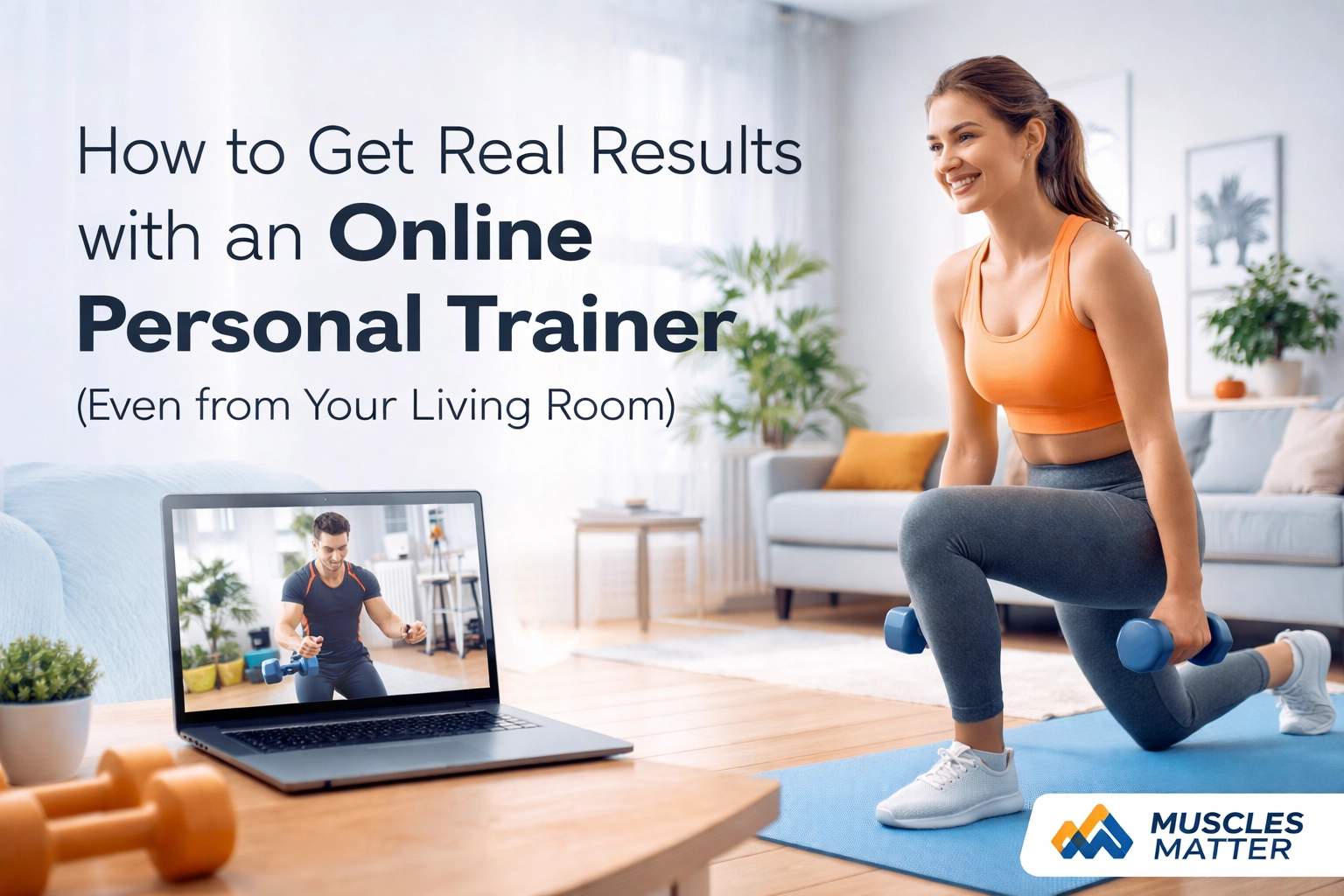
I'm Matt, and I'll be honest with you, when I first started offering online personal training, even I had my doubts. Could I really help someone transform their fitness without being in the same room as them? Could they get the same results as my in-person clients?
Turns out, the answer is a pretty confident yes.
Over the years, I've coached clients from their spare bedrooms, hotel rooms, gardens, and yes: plenty of living rooms. And the results? Just as real as anything achieved in a fancy gym. Sometimes better, actually.
So if you've been wondering whether working with an online personal trainer could genuinely work for you, let me walk you through exactly how it happens.
Your Living Room is More Than Enough
Here's something that might surprise you: you don't need a home gym to get fit. You don't even need much equipment at all.
What you DO need is:
- Enough space to lie down and stretch your arms out
- A willingness to show up consistently
- A coach who knows how to work with what you've got
That's it. Seriously.

When I design programmes for my online personal training clients, I start by asking what they actually have available. A set of resistance bands? Great. A couple of dumbbells gathering dust under the bed? Perfect. Just your bodyweight and a yoga mat? Absolutely workable.
The beauty of working with a good online personal trainer is that they'll adapt the programme to YOUR environment: not the other way around. Can't do a barbell back squat because you don't have a barbell? No problem. We'll swap it for a goblet squat, a Bulgarian split squat, or even a resistance band variation that hits the same muscles.
Your space and equipment should never be a barrier. If a trainer tells you that you need a full gym setup to see results, find another trainer.
The Real Secret: Personalisation That Actually Fits Your Life
Generic workout plans are everywhere online. You can download a free PDF in about thirty seconds. But here's the thing: those plans don't know you. They don't know about your dodgy knee, your shift patterns, or the fact that you've got two kids and approximately zero free time before 9pm.
That's where proper online personal training makes all the difference.
When I work with a client remotely, I'm building something specifically for them. I factor in:
- Their current fitness level and any injuries
- How much time they realistically have
- What equipment (if any) they can access
- Their actual goals: not just "get fit" but the specifics

And this isn't a one-and-done thing either. Your programme evolves as you do. Feeling stronger? We progress the difficulty. Energy levels tanked because work's been mental? We dial it back temporarily. This kind of responsive coaching is what separates a genuine online personal trainer from a random workout app.
Accountability: The Bit Nobody Wants to Talk About
Let's be real for a second. You probably already know roughly what you should be doing to get fitter. Move more. Eat better. Be consistent.
So why haven't you done it?
For most people, it's not a knowledge problem: it's an accountability problem. And that's where having a coach in your corner changes everything.
When you're working with an online personal trainer, someone is actually paying attention. I check in with my clients regularly. I see when workouts are getting done (and when they're not). I notice patterns: like when motivation dips every Thursday, or when a stressful week at work throws everything off track.
This isn't about judgement. It's about support. Knowing that someone's got their eye on your progress is often the nudge you need to lace up your trainers when Netflix is calling.
Some of my clients send progress photos every couple of weeks. Others prefer weekly check-ins via message. Some just want me to hold them accountable to showing up three times a week. Whatever keeps you consistent: that's what we build into your coaching.
But What About Form? Can You Really Learn Exercises Online?
This is probably the biggest concern people have about remote training. And I get it: doing an exercise wrong can lead to injury, or at the very least, you're not getting the benefit you should be.
Here's how I handle it: video submissions.

I ask clients to film themselves doing key exercises and send them over. Then I review the footage and give specific feedback. "Your hips are shooting up too early on that deadlift: try this cue." "Knees are caving in on your squats: here's a drill to fix it."
It's not the same as standing next to you in a gym, but honestly? It's often more useful. You can rewatch my feedback. You can film yourself again and compare. And because you're learning to self-correct, you're building skills that stick with you long-term.
The key is working with a trainer who actually provides this level of detail: not someone who just sends you a programme and disappears.
Progressive Overload: The Engine Behind Your Results
If you want to get stronger, fitter, or leaner, there's one principle that matters more than almost anything else: progressive overload.
In simple terms, this means gradually increasing the challenge over time. More reps. More weight. Less rest. Harder variations.
Your body adapts to what you throw at it. If you keep doing the same thing week after week, you'll plateau. A good online personal trainer tracks your performance and knows exactly when to push things forward: and when to hold back if recovery's an issue.
This is why I use tracking software with my clients. We log workouts, monitor progress, and make data-driven decisions about what comes next. No guesswork. Just smart programming that keeps you moving in the right direction.
What to Look For in an Online Personal Trainer
Not all online coaching is created equal. Some "trainers" will take your money, send you a generic PDF, and point you towards a Facebook group if you have questions. That's not coaching: that's a con.
Here's what genuine online personal training should include:
- Personalised programming tailored to your goals, equipment, and schedule
- Regular communication with your actual coach (not an assistant or chatbot)
- Form feedback through video review
- Progress tracking so you can see how far you've come
- Honest expectations about what's achievable and how long it'll take

If a trainer promises you'll lose three stone in a month or build muscle without any effort, run a mile. The good ones are upfront about the work involved: and they're there to support you through it.
This Works for Runners Too
Quick side note for my runners out there: online coaching isn't just for strength training. As a running coach, I work with clients on building mileage safely, improving pace, preventing injuries, and integrating strength work that actually supports their running goals.
Whether you're training for your first 5K or chasing a marathon PB, remote coaching gives you the structure and accountability to get there: without needing to meet up at a track every week.
Ready to See What's Possible?
Look, I know it can feel like a leap of faith. Training from your living room with a coach you might never meet in person? It sounds a bit strange at first.
But the results speak for themselves. Clients getting stronger, running faster, feeling more confident: all without stepping foot in a traditional gym.
If you've been putting off your fitness goals because you thought you needed fancy equipment or endless free time, maybe it's time to rethink that. Sometimes, all you need is the right guidance and a bit of floor space.
Head over to my personal training page if you want to find out more about how we could work together. I'd love to help you prove to yourself what's actually possible.
Recent Comments