
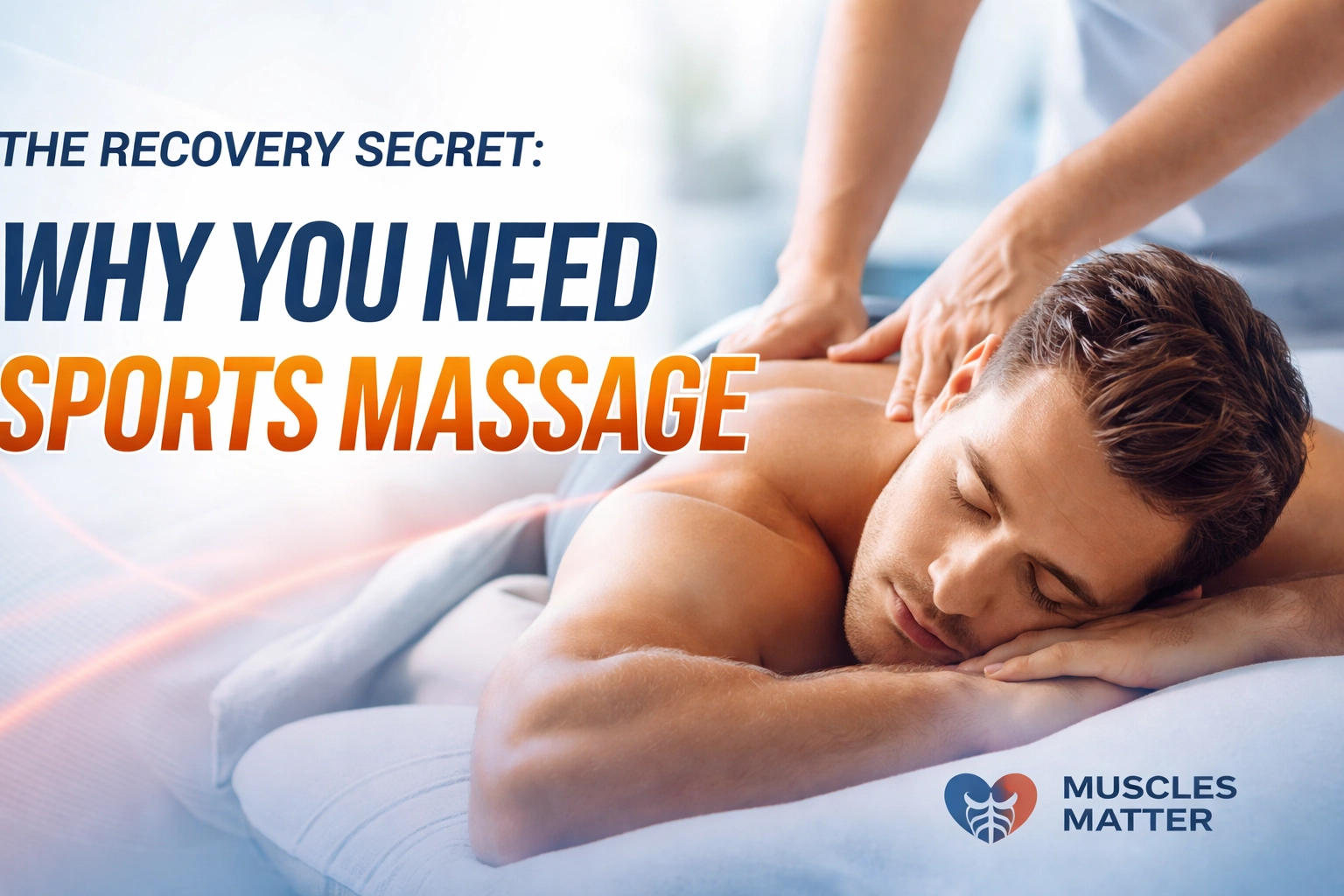
Let me let you in on something. The biggest gains don't happen in the gym. They happen when you're recovering from it.
I'm Matt, and I'm both a personal trainer and a sports massage therapist here at Muscles Matter. And honestly? The massage side of what I do might just be the most underrated service I offer.
Here's the thing. Most people think sports massage is something only elite athletes need. Like it's reserved for Premier League footballers or Olympic sprinters. But that couldn't be further from the truth. If you've ever woken up feeling like the Tin Man before his oil can, this post is for you.
Why I Became a Sports Massage Therapist
Before I get into the science, let me share a bit of my own story.
I didn't just study sports massage because it seemed like a good add-on to personal training. I studied it because I needed it myself. Years of training, pushing through niggles, and ignoring the warning signs my body was giving me left me pretty broken down. Tight hips. Stiff shoulders. That constant feeling of being "wound up" even on rest days.
When I finally started getting regular sports massage, everything changed. I moved better. I trained harder. And weirdly, I actually felt more relaxed in general. It was like someone had finally released the handbrake.
So I trained in it. And now I get to help my clients experience that same transformation. There's something pretty special about watching someone walk in hunched over and walk out standing three inches taller.

What Actually Is Sports Massage?
Right, let's clear something up. Sports massage isn't just a "nice relaxing spa treatment." It's targeted, therapeutic work on your soft tissues, your muscles, tendons, and fascia, designed to improve how your body functions.
It involves techniques like:
- Deep tissue work to release chronic tension
- Trigger point therapy to tackle those stubborn knots
- Myofascial release to improve tissue quality and movement
- Stretching and mobilisation to restore range of motion
The goal isn't just to make you feel good for an hour (although that's a lovely bonus). It's to actually fix the underlying issues that are holding you back.
The Benefits You Can't Ignore
So what does sports massage actually do for you? Quite a lot, as it turns out.
1. Faster Recovery Between Sessions
When you train hard, your muscles accumulate metabolic waste products like lactic acid. Your body clears these naturally, but massage speeds up the process significantly by improving circulation. More blood flow means more oxygen and nutrients reaching your muscles, and faster removal of the stuff that makes you sore.
Research shows that massage is actually one of the most effective methods for reducing DOMS, that's Delayed Onset Muscle Soreness, the "why do my legs hurt so much" feeling you get 24-48 hours after leg day. Better than cold therapy. Better than compression garments. Better than just resting and hoping for the best.
2. Improved Mobility and Flexibility
Feeling stiff? There's a reason for that. Over time, your muscles and fascia develop adhesions, basically, areas where the tissue has become stuck together or knotted up. These adhesions restrict your movement and make everything feel harder than it should.
Sports massage breaks down these adhesions and restores normal tissue function. The result? You move better. Your squats feel smoother. Your shoulders stop clicking. You can actually touch your toes again.

3. Injury Prevention
This is the big one. Most injuries don't come out of nowhere. They build up over time through muscle imbalances, restricted movement patterns, and ignored warning signs.
Regular sports massage catches these issues before they become problems. It identifies areas of tension and restriction that could lead to injury down the line. Think of it as maintenance for your body, like getting your car serviced before the engine light comes on.
4. Reduced Inflammation
A bit of inflammation after training is normal and actually necessary for adaptation. But too much inflammation delays recovery and increases injury risk. Massage helps keep inflammation within productive levels, so your body can repair and rebuild without getting overwhelmed.
5. Stress Relief (Yes, Really)
Training is stress. Work is stress. Life is stress. And all that stress accumulates in your body: usually in your neck, shoulders, and lower back.
Sports massage lowers cortisol (your stress hormone) while boosting endorphins (your feel-good hormones). The result is that you leave feeling genuinely more relaxed and mentally clearer. It's not just physical recovery. It's mental recovery too.
It's Not Just for Athletes
Let me be really clear about this: you do NOT need to be a pro athlete to benefit from sports massage.
If you:
- Sit at a desk all day and feel tight
- Train a few times a week and want to recover better
- Have nagging aches that won't go away
- Want to move better and feel less "old"
- Are on a fat loss journey and training more than usual
…then sports massage is for you.
I work with everyone from complete beginners who've just started their fitness journey to people training five days a week. The common thread? They all want to feel better in their bodies. And massage delivers that.

When Should You Book a Sports Massage?
Timing matters more than you might think.
For general maintenance: Every 2-4 weeks is ideal for most people. This keeps on top of tension before it becomes a problem and ensures you're always moving well.
After a tough training block: If you've been pushing hard for a few weeks, a massage around 24-48 hours after your last hard session is perfect for accelerating recovery.
When something feels "off": Don't wait until you're injured. If an area feels tight, restricted, or like it's about to go, get it looked at. Prevention is always easier than cure.
Not immediately before training: Deep tissue work needs time to settle. I'd recommend at least 24-48 hours before any intense session, as the deeper work can temporarily increase inflammation.
What to Expect in a Session
If you've never had a sports massage before, here's what happens when you come to see me.
First, we chat. I want to know what's going on: where you're feeling tight, what training you've been doing, any injuries or issues. This isn't a one-size-fits-all treatment.
Then we get to work. I'll focus on the areas that need attention, using a combination of techniques based on what your body needs. Some bits might be uncomfortable (in a "hurts so good" way), but I'll always check in and adjust the pressure.
Afterwards, you'll probably feel a bit looser, maybe a bit tired. Drink plenty of water and avoid anything too strenuous for the rest of the day. The real magic often happens over the next 24-48 hours as your body responds to the work.
The Recovery Secret
Here's what I've learned from my own journey and from working with hundreds of clients: recovery isn't passive. You can't just hope your body fixes itself. You have to actively invest in it.
Sports massage is that investment. It's the difference between feeling constantly beaten up and feeling like your body actually works for you. It's the secret weapon that lets you train harder, more consistently, and with less risk of breaking down.
If you're ready to experience it for yourself, you can check out my sports massage services or book in for a session directly.
Your body's been working hard for you. Maybe it's time to give something back.
Recent Comments