
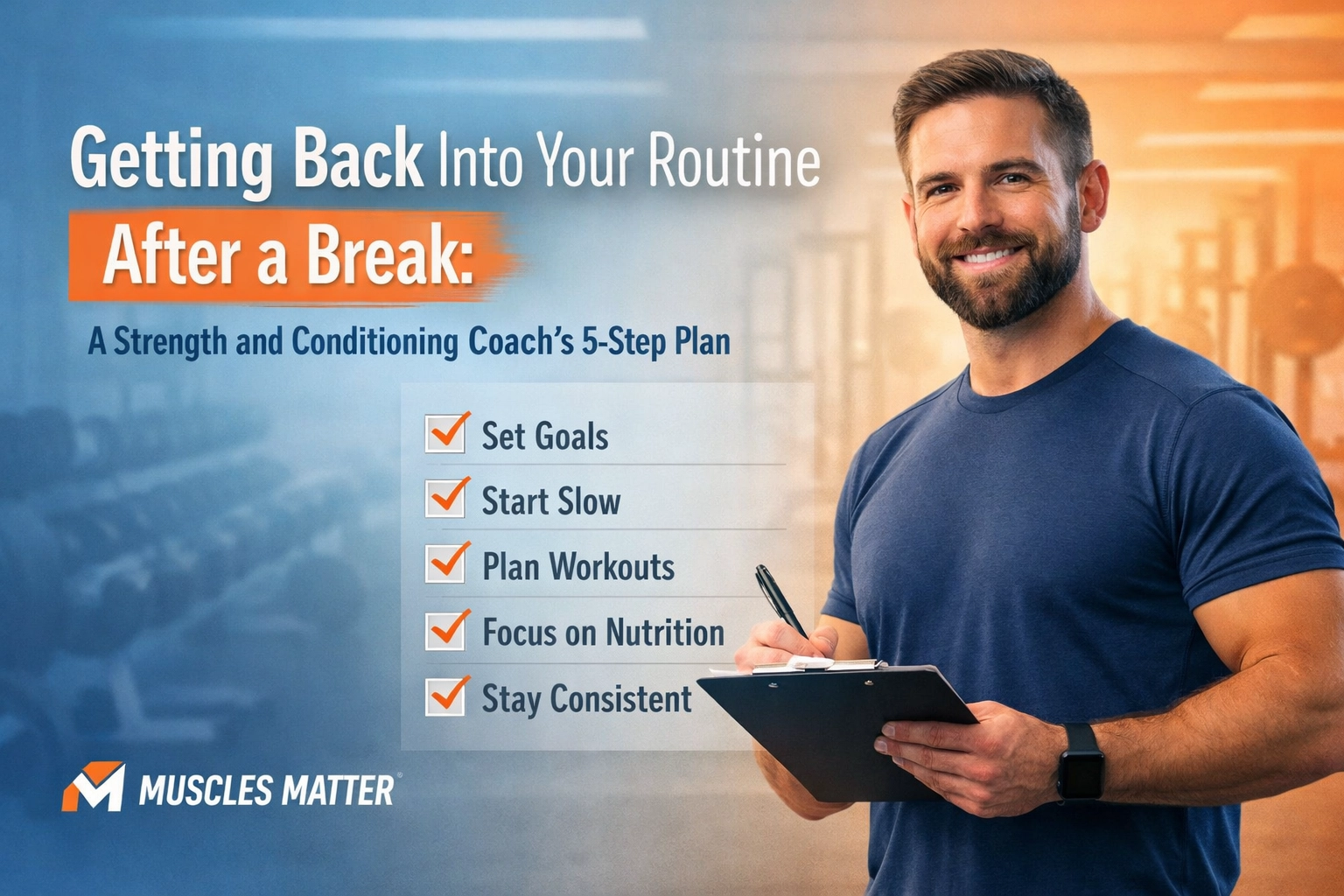
I'm Matt, and I've been working as a strength and conditioning coach for years now. One of the most common conversations I have with clients isn't about hitting new personal records or perfecting their deadlift form, it's about getting back on track after life has knocked them off course.
Whether it's a holiday, an injury, work stress, or just plain old life getting in the way, breaks happen. And that's completely normal. The problem isn't taking the break. The problem is thinking you can jump straight back to where you left off like nothing happened.
Trust me, I've learned this the hard way myself. Years ago, I came back from a two-week holiday feeling fresh and ready to smash my usual training. Within three days, I'd aggravated my shoulder and spent the next month doing rehab work. Not my finest moment.
So let me share the five-step plan I now use with all my clients, and myself, when returning to training after time away.
Step 1: Start at 70% (Yes, Really)
This is the bit everyone hates hearing, but it's absolutely crucial. When you return to training after a break, you need to start at roughly 70% of your previous strength levels.
I know what you're thinking. "Matt, that's way too light. I'll be bored."
But here's the thing: your muscles might remember the movements, but your nervous system, joints, and connective tissues need time to readjust. Going straight back to your previous weights is like asking your body to run before it can walk again.

I had a client last year who'd taken three weeks off after a house move. She was adamant she could lift the same as before. I convinced her to drop the weight to 70%, and by week two, she admitted she'd been more sore than expected even at that reduced load. By week four, she was back to her previous numbers: without any setbacks.
Start conservative. Your ego might take a temporary hit, but your body will thank you.
Step 2: Build a Balanced Weekly Structure
Random workouts won't cut it when you're rebuilding your routine. You need structure, but not something so rigid that it feels like a chore.
Here's the framework I recommend for most people coming back after a break:
- Day 1: Lower body strength work
- Day 2: Low-intensity cardio (walking, cycling, swimming)
- Day 3: Upper body strength work
- Day 4: Low-intensity cardio again
- Day 5: Interval conditioning or circuits
- Days 6-7: Rest or active recovery (yoga, stretching, gentle walking)
This structure gives you variety without overwhelming your system. You're hitting all the major muscle groups, keeping your cardiovascular fitness ticking over, and building back your work capacity gradually.
The key here is consistency over intensity. Showing up for four moderate sessions beats one killer workout followed by three days of being too sore to move.
Step 3: Apply Progressive Overload (The Right Way)
Progressive overload is just a fancy way of saying "gradually make things harder." But when you're returning from a break, the emphasis needs to be on gradually.
I recommend increasing your training load by no more than 5% per week. That might mean:
- Adding 2.5kg to your squat
- Doing one extra rep per set
- Adding one more conditioning round
- Progressing an exercise variation (from box press-ups to regular press-ups, for example)

The mistake people make is trying to progress too quickly. They feel good one week, so they jump from 60kg to 70kg on their deadlift. Then they wonder why their lower back is complaining.
Small increments compound over time. Trust the process.
As a strength and conditioning coach, I've seen people achieve remarkable results simply by being patient with progression. It's not sexy, but it works.
Step 4: Follow Proper Training Phases
Your body doesn't just "get fit" in a straight line. It goes through distinct phases, and understanding these will help you avoid frustration.
Introduction Phase (1-2 weeks): This is where your body remembers what training feels like. You might see some rapid improvements simply because your nervous system is waking up. Don't mistake this for being "back to normal": it's just your body adapting to the new stimulus.
Loading Phase (4-5 weeks): Now we start gradually increasing the overall training load. This is where the real work happens. You're building strength, improving conditioning, and your body is responding to the progressive overload.
Stabilisation Phase (1-2 weeks): This is crucial but often overlooked. You maintain similar training loads rather than continuing to increase them. This allows your fitness improvements to "stick" rather than being temporary adaptations.
Restoration Phase: Recovery-focused work that prepares you for the next training block. Think of it as scheduled downtime that prevents forced downtime later.
Most people skip the stabilisation and restoration phases. Then they wonder why they keep getting injured or burnt out.
Step 5: Prioritise Recovery and Consistency
Here's something I tell every client: your strength gains happen during recovery, not during your workouts.
When you're training, you're actually breaking down muscle tissue and stressing your systems. The magic happens when you rest, eat properly, and sleep well.

So what does proper recovery look like?
Nutrition: You need adequate protein (aim for 1.6-2.2g per kg of body weight) and enough overall calories to support your training. Undereating while trying to rebuild fitness is like trying to build a house without enough bricks.
Sleep: This is non-negotiable. Aim for 7-9 hours per night. If you're consistently getting less, your recovery and performance will suffer.
Rest Days: Actually take them. "Active recovery" doesn't mean a high-intensity spin class. It means gentle movement that promotes blood flow without adding stress.
Tracking: Keep a simple training log. It doesn't need to be fancy: just note what you did, how it felt, and any niggles. This helps you spot patterns and stay motivated when you can look back and see actual progress.
One of my online coaching clients struggled with consistency until we implemented a simple checkbox system. Every day she did her planned workout, she marked it off. Seeing those checkboxes fill up became addictive for her, and she went from sporadic training to 12 weeks of consistent work.
The Bottom Line
Getting back into your routine after a break isn't about smashing yourself in the first week to "make up for lost time." It's about being strategic, patient, and consistent.
Start at 70% of your previous capacity. Build a balanced weekly structure. Progress gradually: no more than 5% increases per week. Follow proper training phases. And prioritise recovery as much as your actual workouts.
I've worked with dozens of clients who've successfully rebuilt their fitness using this approach. Some had taken weeks off, others months. Some were dealing with injuries, others just life stress. But the principles remain the same.
If you're looking for guidance on getting back into training, or you want a structured programme tailored to your specific situation, that's exactly what I help people with through online personal training. Whether you're searching for "personal training near me" or prefer the flexibility of remote coaching, having a strength and conditioning coach in your corner makes the process so much smoother.
The break you took doesn't define you. What matters is what you do next. Start where you are, not where you were, and build back smarter than before.
Recent Comments