
I'm Matt, and if you'd told me years ago that lifting weights would make me a better runner, I probably would have laughed. Like most runners, I thought the answer to running faster was simply… running more. More miles, more tempo runs, more intervals.
But here's what I've learned as a strength and conditioning coach: the runners who consistently improve, and stay injury-free, are the ones who step off the road and into the gym. Running strength training isn't about bulking up or replacing your runs. It's about building the foundation that lets you run faster, longer, and without your body falling apart.
So if you're a runner who's never touched a dumbbell, or you've dabbled but don't really know what you're doing, this guide is for you.
Why Runners Need Strength Training
Let's get one thing straight: running is brilliant cardio, but it's also incredibly repetitive. Your body performs the same motion thousands of times per run. And while that repetition builds endurance, it also creates imbalances and weaknesses that can lead to injury.
Every time your foot strikes the ground, your muscles, tendons, and joints absorb forces of up to three times your body weight. Without adequate strength, those forces get absorbed by the wrong structures, hello, knee pain, shin splints, and plantar fasciitis.
Running strength training addresses these imbalances. It builds the muscular support system that keeps your joints stable, your form efficient, and your body resilient. Think of it as insurance for your running career.

How Strength Training Makes You Faster
Here's where it gets exciting. Strength training doesn't just prevent injuries: it actually makes you a faster runner.
When you're stronger, each stride becomes more powerful. Your muscles can generate more force with less effort, which means you cover more ground without burning through your energy reserves as quickly. This is what running coaches call "running economy," and it's one of the biggest predictors of performance.
Studies consistently show that runners who incorporate strength training improve their running economy by up to 8%. That might not sound like much, but over a 5K or half marathon, it translates to significant time savings.
And it's not just about raw power. Stronger glutes and core muscles help maintain proper running form when fatigue sets in. You know that feeling when your hips start dropping and your stride gets sloppy in the final miles? That's weakness showing up. Address it in the gym, and you'll hold your form: and your pace: much longer.
How Strength Training Helps You Run Longer
Endurance isn't just about your cardiovascular system. Your muscles need to withstand the repeated stress of long-distance running without breaking down.
When your muscles are weak, they fatigue faster. And when they fatigue, other muscles have to compensate. This compensation pattern is how minor niggles become full-blown injuries. It's also how your form deteriorates, making each mile harder than it needs to be.
Strength training builds muscular endurance alongside raw strength. Your legs learn to handle the load of mile after mile without giving out. Your core stays engaged to support your spine. Your calves can absorb the impact without screaming at you.
The result? You can run longer distances more comfortably, recover faster between runs, and stay consistent with your training: which is ultimately what builds endurance over time.

The Key Exercises Every Runner Needs
As a strength and conditioning coach, I see runners overcomplicating their gym work all the time. You don't need fancy equipment or complex programmes. You need to master a handful of fundamental movements that directly support your running.
Lower Body Compound Movements
Squats are the foundation. They build strength in your quads, glutes, and hamstrings: the primary muscles driving your run. Start with bodyweight squats and focus on depth and control before adding weight.
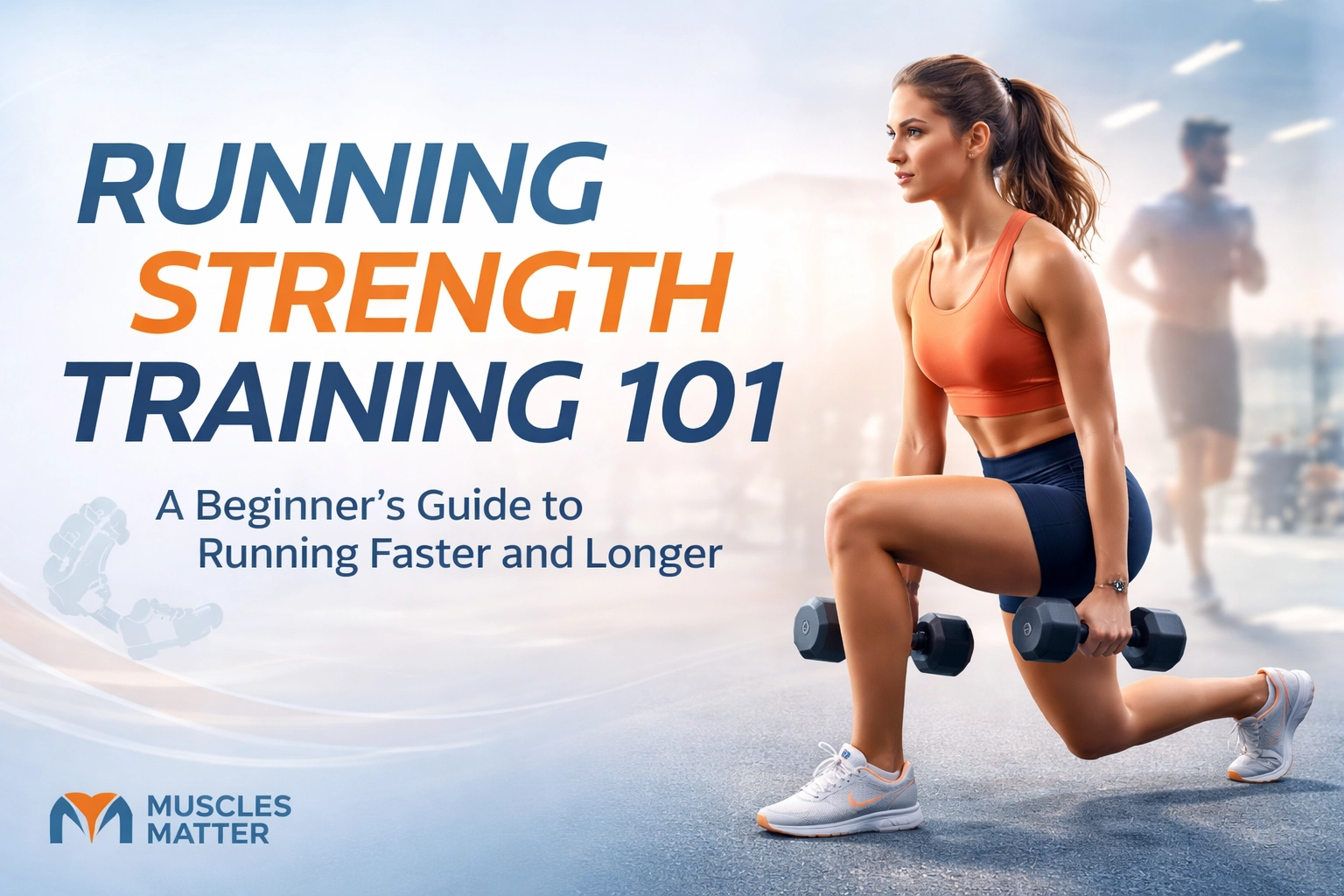
Lunges mimic the single-leg nature of running. Reverse lunges are particularly good because they're easier on the knees while still challenging your balance and stability.
Deadlifts strengthen your entire posterior chain: glutes, hamstrings, and lower back. Romanian deadlifts are brilliant for runners because they emphasise the hip hinge pattern you use with every stride.
Step-ups build single-leg strength and power, which translates directly to hill running and finishing kicks.
Hip and Glute Work
Your glutes are the powerhouse of running, but they're often weak and underactive: especially if you sit at a desk all day.
Glute bridges wake up those muscles and build strength in hip extension. Progress to single-leg glute bridges once the double-leg version feels easy.
Core Stability
Your core isn't just your abs. It's the entire cylinder of muscles around your midsection that keeps you stable and transfers power between your upper and lower body.
Planks build isometric core strength: the ability to hold a stable position under load, which is exactly what your core does while running.
Side planks target the obliques and hip stabilisers, which prevent that side-to-side wobble that wastes energy.
Calf Strength
Your calves take an absolute beating when you run. Weak calves are a common cause of Achilles problems and shin splints.
Calf raises: both double and single leg: build the strength and resilience your calves need. Don't rush these; control the lowering phase for maximum benefit.

A Simple Beginner Routine
You don't need to spend hours in the gym. Two to three sessions per week, lasting 30-45 minutes each, is plenty. Here's a simple routine to get you started:
Warm-up (5-10 minutes)
- Light jogging or jumping jacks
- Leg swings and hip circles
- Bodyweight squats to loosen up
Main Circuit (repeat 2-3 times)
- Bodyweight squats: 15 reps
- Glute bridges: 15 reps
- Reverse lunges: 10 reps each leg
- Push-ups: 8-12 reps
- Plank: 30-45 seconds
- Single-leg calf raises: 12 reps each leg
Cool-down
- Static stretching for quads, hamstrings, hip flexors, and calves
For the first few weeks, focus entirely on form. Don't worry about adding weight until every movement feels controlled and comfortable. Once you've nailed the basics: usually around week five or six: you can start adding light dumbbells to increase the challenge.
How to Fit Strength Training Around Your Running
Timing matters. You don't want heavy leg sessions the day before a hard run. Here's how I typically structure it for the runners I work with:
- Easy run days: Perfect for strength training afterwards
- Hard run days (intervals, tempo): Keep strength work light or skip it entirely
- Rest days: Can be used for strength, but listen to your body
- Long run days: Rest or very light mobility work only
The key is treating strength training as part of your overall programme, not an add-on that competes with your running. A good running coach or strength and conditioning coach can help you integrate the two effectively.
Getting Started
If you're completely new to strength training, start simple. Bodyweight exercises are your friend. Master the movements before you worry about loading them up.
And be patient. You won't see dramatic improvements overnight. But stick with it for six to eight weeks, and you'll notice the difference: stronger legs, better form, and runs that feel easier than they should.
If you want guidance building a personal training programme that supports your running goals, I'd love to help. And if your legs are feeling the strain of increased training, sports massage can work wonders for recovery.
Running strength training isn't complicated. It just takes consistency and a willingness to step outside your comfort zone. Your future self: crossing finish lines faster and injury-free( will thank you for it.)
Recent Comments